Why Flying With a Baby Requires Its Own Packing Checklist
An airplane removes every backup plan parents rely on at home — there's no pausing, no stepping outside, and no quick trip to the store for the one thing you forgot.
Flights add challenges that normal outings don't:
- Ear pressure changes during takeoff and descent
- Security rules for liquids, milk, and formula
- A confined space with no room to spread out
- Cabin temperatures that swing from warm to cold
- Delays that can double the length of the travel day
A flight bag packed in layers — security items on top, in-flight essentials reachable from the seat, reserves in the overhead bin — turns most of these challenges into non-events.
Complete Baby Airplane Checklist
Use this checklist before every flight. Screenshot it, print it, or generate a personalized version tailored to your baby's age and flight length.
Diaper Bag Essentials
- Diapers — one per hour of travel, plus extras for delays
- Wipes
- Portable changing pad
- Diaper cream
- Wet bag or zip bags for soiled items
- Hand sanitizer
- 2–3 spare outfits in separate zip bags
- Spare shirt for the parent
- Burp cloths
Parent TipPack each spare outfit in its own zip bag. When a blowout happens mid-flight, you grab one bag with everything you need — and the same bag seals away the soiled clothes afterward.
Feeding on the Plane
- Formula (pre-measured) or expressed breast milk
- Bottles — more than you think you need
- Insulated bottle bag with ice pack
- Nursing cover if you use one
- Bibs
- Snacks and pouches for babies on solids
- Sippy cup or straw cup
- Bottle brush and travel soap for layovers
Formula, expressed breast milk, and baby food are exempt from standard liquid limits at most security checkpoints when you're traveling with an infant. Declare them at screening and allow a few extra minutes — it's routine for security staff, even if it's new to you.
Sleep & Comfort
- Pacifiers — at least two, with a clip
- Favorite comfort item or small lovey
- Lightweight blanket or muslin
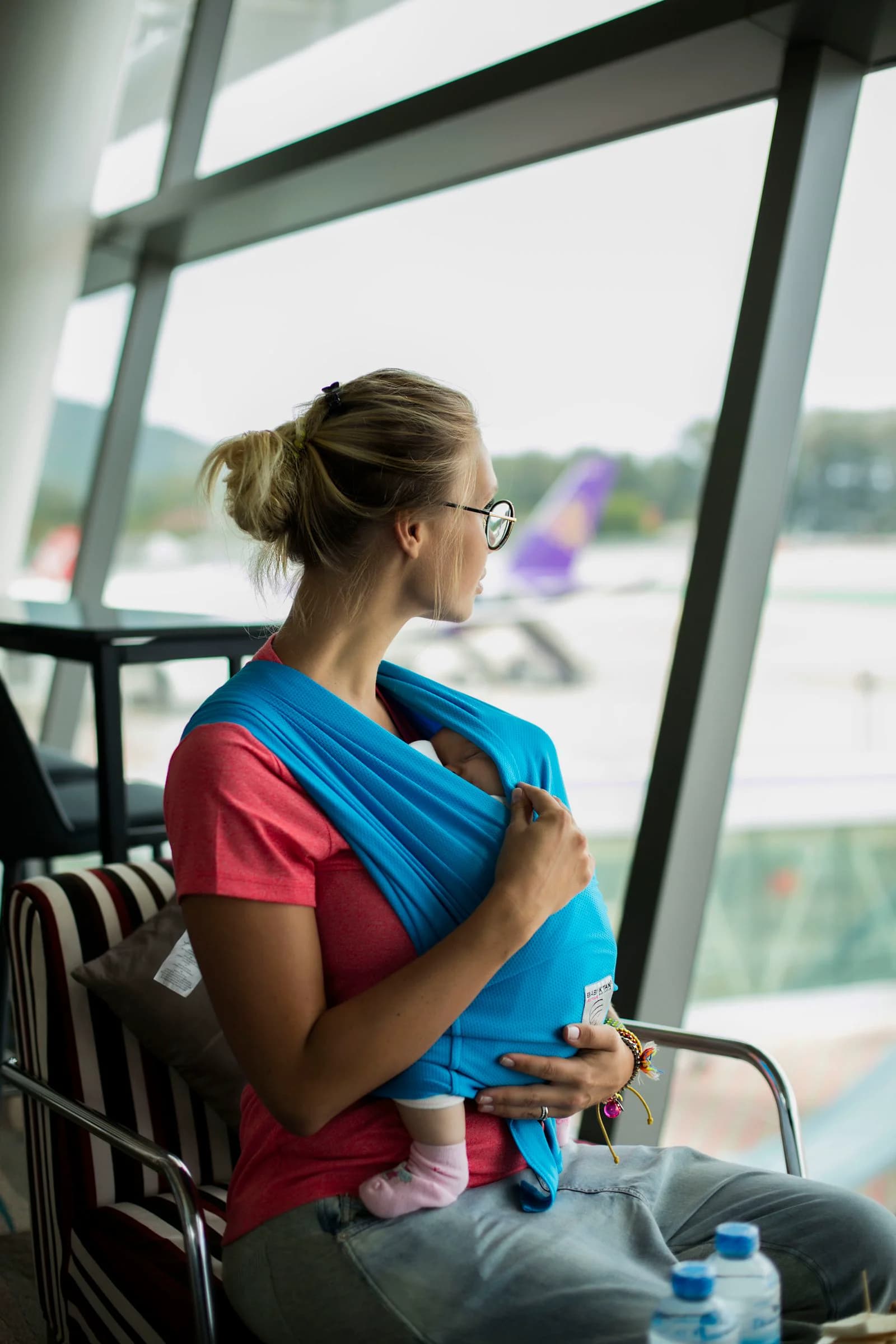
- Baby carrier or sling for the airport
- Footed pajamas or layers for cabin temperature swings
- White-noise app downloaded to your phone
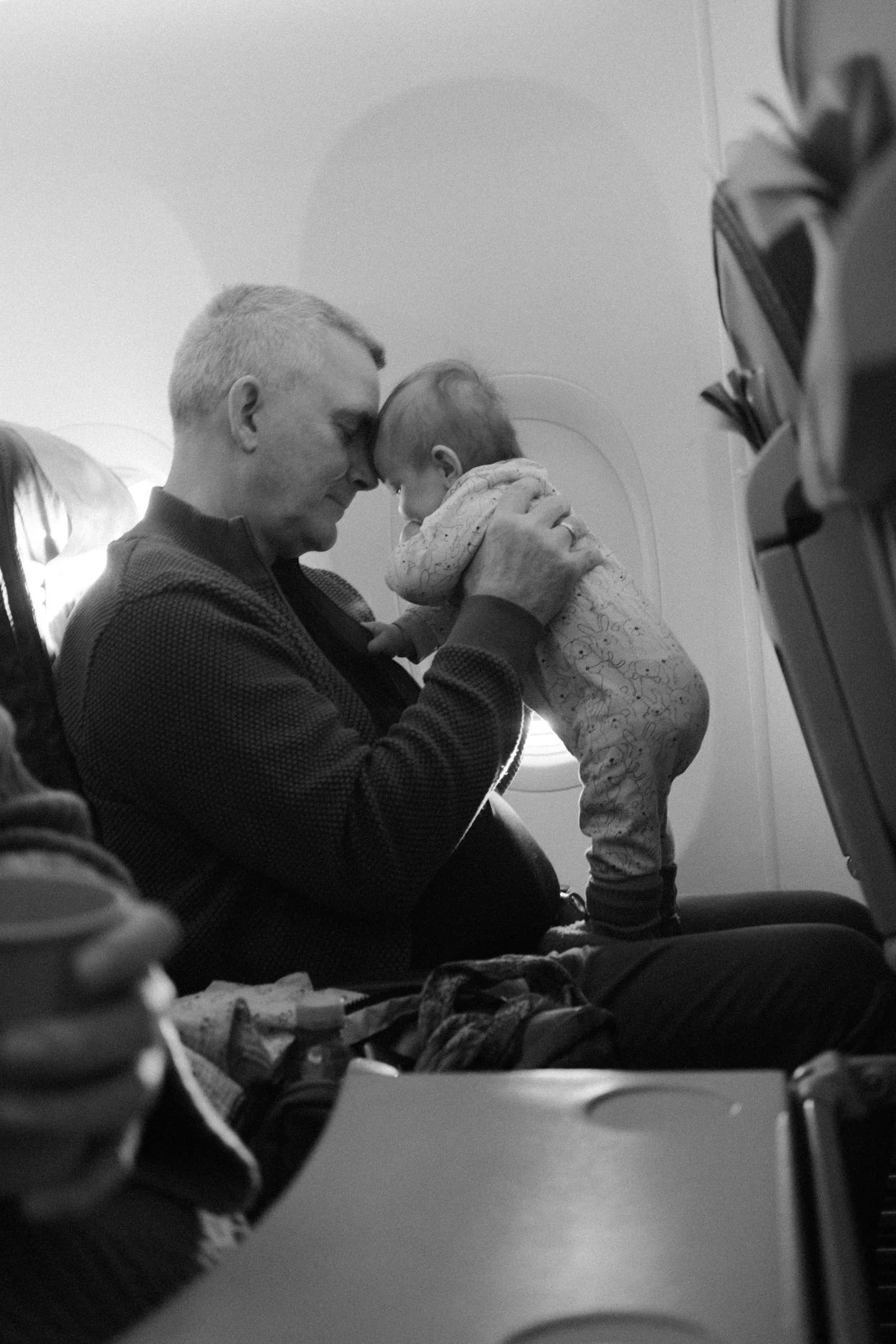
Engine noise actually helps many babies sleep — it's the interruptions that wake them. A carrier keeps the baby settled through boarding and lets your arms rest during the flight, and a light muslin blocks cabin lights without overheating.
Documents & Logistics
- Baby’s passport or birth certificate
- Boarding passes for you and the baby
- Travel insurance details
- Airline stroller and car-seat gate-check tags
- Consent letter if one parent travels alone internationally
- Pediatrician contact details and any medication
Lap infants usually need proof of age even on domestic flights, and international trips require the baby's own passport. Keep every document in one outside pocket of the diaper bag — the moment you need them, you'll be holding a baby with one arm.
Entertainment
- One or two small, quiet toys — new ones hold attention longer
- Soft or crinkle book
- Teething toy
- Suction-cup toy for the tray table
- Downloaded videos or music for older babies (with volume off or headphones)
Babies need far less entertainment on planes than parents expect — the cabin itself is stimulation. One or two small, quiet, unfamiliar toys go further than a bag full of favorites from home.
Want a flight checklist tailored to your baby's age?
AI-generated based on age, destination, and flight length
Things Parents Commonly Forget
Even well-prepared parents board with at least one gap in the bag — and on a plane, there's no fixing it after the doors close.
The most forgotten flight items include:
- Spare shirt for the parent
- Enough diapers for delays, not just the flight
- Pacifier clip
- Zip bags for soiled clothes
- Bottle cleaning supplies for layovers
- Baby’s documents
- Diaper cream
- Snacks for the parent
The spare shirt for the parent deserves special mention. Babies spit up, leak, and spill on the person holding them — and wearing it for the next five hours is the kind of mistake parents only make once.
In-Flight Tips for Flying With a Baby
These are practical habits experienced parents develop after a few flights — not rules from an airline pamphlet.
Feed During Takeoff and Descent
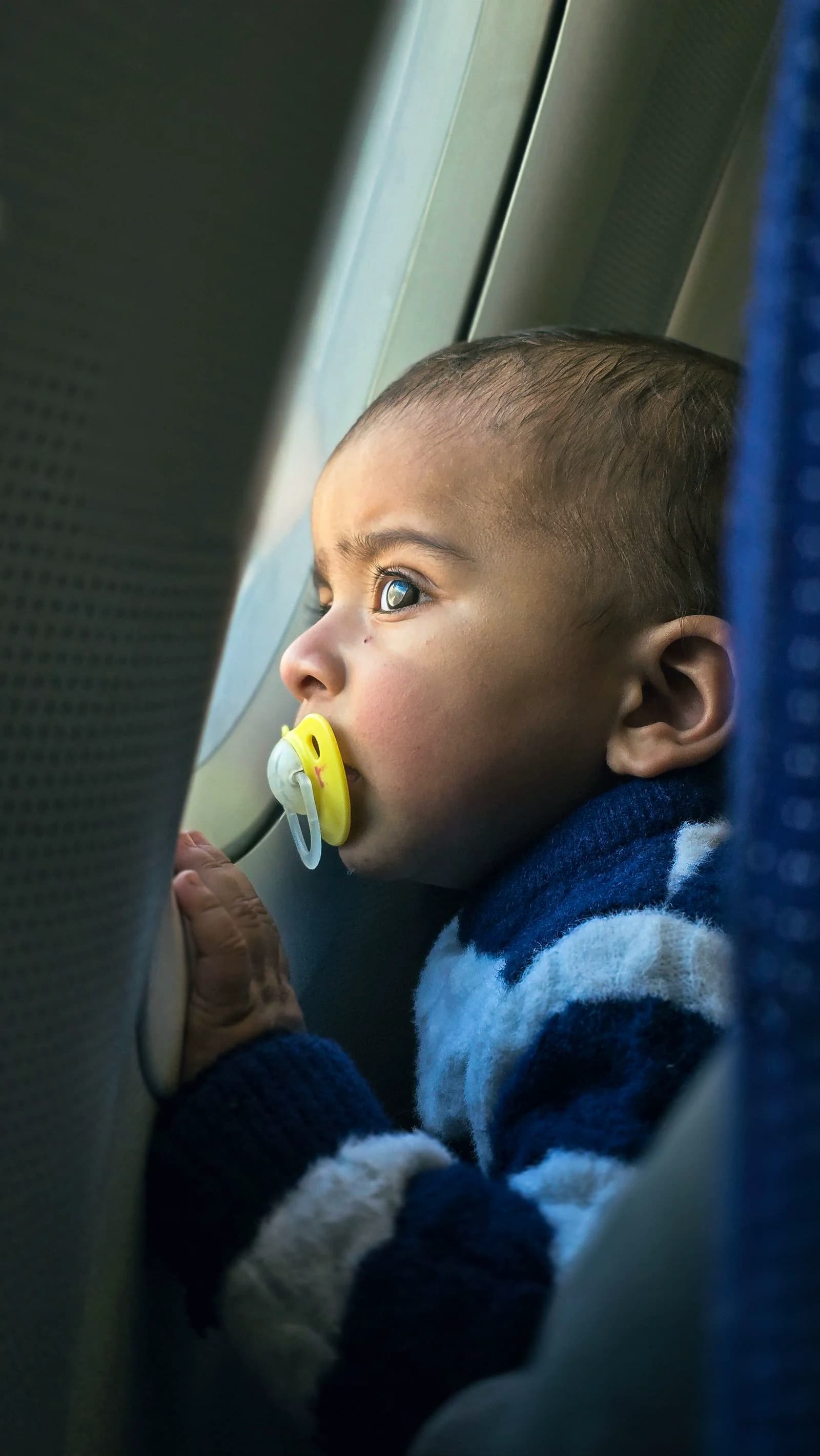
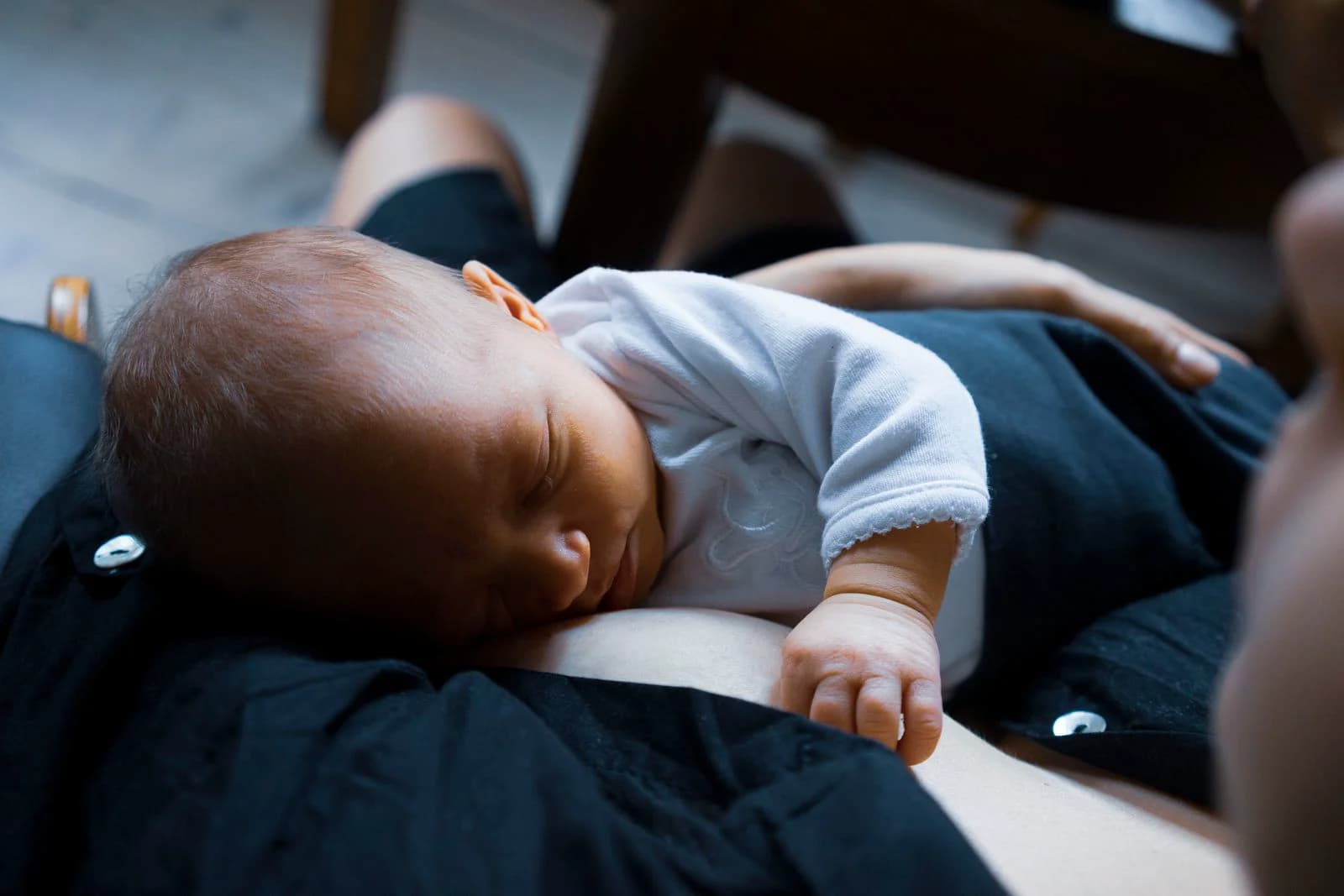
Swallowing is how babies equalize ear pressure, and pressure changes are steepest during climb and descent. Timing a bottle, nursing session, or pacifier for those moments prevents most of the crying parents dread. Descent starts earlier than most people expect — begin the feed when the captain announces the approach, not when the wheels are about to touch down.
Board Strategically, Not Automatically
Family pre-boarding sounds helpful, but it adds thirty minutes of confined time before the plane even moves. When two adults travel together, many experienced parents send one ahead with the bags while the other walks the baby in the terminal until final boarding. Solo parents usually do better boarding early, since setting up one-handed takes time.
Pack the Diaper Bag in Layers
Security, the seat pocket, and the overhead bin each need different things. Keep documents and liquids on top for the checkpoint, move one diaper, wipes, and a spare outfit into the seat-back pocket after boarding, and leave the reserves in the bag overhead. Digging through a full bag while holding a baby in a narrow seat is where most in-flight stress comes from.
Dress Everyone in Layers
Cabin temperature swings from warm at the gate to cold at altitude, and babies cannot regulate temperature as well as adults. Footed pajamas with a light layer over them work well for babies, and an easily removable layer for the parent matters more than most people expect — carrying a baby through an airport is warm work.
Plan for the Travel Day, Not the Flight Time
A two-hour flight is rarely a two-hour day. Between check-in, security, boarding, taxiing, and ground transport at the destination, most trips consume five to eight hours door to door. Packing diapers, milk, and snacks for the whole day — plus a realistic delay — is the single habit that separates calm travel days from stressful ones.
Printable Baby Airplane Checklist
Many parents prefer a printable checklist the night before a flight. A printed version reduces forgotten items, organizes the diaper bag by layer, and makes travel mornings noticeably less stressful.
Sign up free to generate and download your personalized version — tailored to your baby's age and your specific flight.
Download Printable Checklist →Frequently Asked Questions
Common questions parents ask about flying with a baby.
What should I pack in a diaper bag for a flight with a baby?+
A flight diaper bag should include one diaper for every hour of travel plus extras, wipes, a portable changing pad, two to three spare outfits in zip bags, burp cloths, formula or expressed milk, bottles, snacks for older babies, a pacifier with a clip, a comfort item, a lightweight blanket, and a wet bag for soiled clothes. Keep documents and boarding passes in an outside pocket so you never dig for them while holding the baby.
How do I protect my baby’s ears during takeoff and landing?+
Swallowing equalizes ear pressure, so feeding during takeoff and especially descent is the most effective approach. Time a bottle, nursing session, or pacifier for the moments the plane starts climbing and roughly thirty to forty minutes before landing. A baby who is already asleep during descent usually does not need to be woken — swallowing during sleep typically manages pressure changes adequately.
Can I bring formula, breast milk, and baby food through airport security?+
Yes. Formula, expressed breast milk, and baby food are exempt from standard liquid limits on most airlines and at most airports, including TSA checkpoints in the United States. Quantities larger than 100 ml are allowed when traveling with an infant — declare them at security and allow a few extra minutes for screening. Ice packs used to keep milk cold are also permitted.
What documents does a baby need to fly?+
For international flights, babies need their own passport and, where applicable, visas. For domestic flights, many airlines ask for a birth certificate or other proof of age, especially for lap infants flying free or at a discount. If one parent is traveling alone internationally, some countries also ask for a notarized consent letter from the other parent. Check your airline’s requirements a few weeks before departure.
What do parents most commonly forget when flying with a baby?+
The most commonly forgotten items are a spare shirt for the parent, enough diapers for delays, a pacifier clip, zip bags for soiled clothing, bottle cleaning supplies for layovers, and the baby’s documents. Many parents also forget to plan for delays — packing for the scheduled flight time instead of the whole travel day is the most frequent mistake.
Related Packing Lists
Spend Less Time Worrying And More Time Traveling
BagCheck Baby helps parents create personalized packing checklists for flights, road trips, beach days, daycare, doctor visits, hospital stays, and everyday family adventures.
Less stress. Better preparation. More family memories.
Create My Flight Checklist →